When Tree Removal Becomes a Safety Necessity: What Homeowners Should Know
Every so often, a storm rolls through Volusia County and leaves behind a mess of snapped limbs and leaning trunks. You might look at a damaged oak in your yard and wonder if it will hold, or if it is time to finally deal with that old hickory that has been dropping branches for years. These are the moments when people start thinking seriously about tree removal. It is not something most homeowners plan for. But when the situation calls for it, knowing what is involved can save you time, money, and a lot of worry.
The truth is that removing a tree is rarely as simple as cutting it down. A lot depends on the tree's size, its location, the condition of the wood, and what is around it. A tree that stands alone in an open field is one thing. A tree that leans toward your house, with power lines running through its canopy, is an entirely different challenge. Experience and good judgment matter here. The right approach keeps everyone safe and prevents damage to your property.
Reading the Warning Signs
Trees are resilient, but they do show when they are struggling. Some signs are obvious. A trunk that has split, large hanging limbs that are dead, or roots that are lifting the soil around the base all point to a tree that may fail. Other signs are quieter. A tree that drops its leaves earlier than its neighbors, or one that has mushrooms growing at the base, could have internal rot that is not visible from the outside. If you notice any of these, it is worth having a professional take a look.
Not every tree with a problem needs to come down. Sometimes a good trim or the removal of a single heavy limb is enough to restore balance. But when the trunk itself is compromised, or when the tree's root system has been damaged by construction or erosion, removal becomes the only realistic option. The cost of waiting can be far higher than the cost of acting early.
What Tree Removal Actually Involves
Professional tree removal is a careful process. It starts with an assessment of the tree and the space around it. The arborist or crew leader will look at the lean of the tree, the condition of the wood, and the location of nearby structures, fences, and utilities. They will decide on the best direction for the tree to fall, or whether it needs to be taken down in sections.
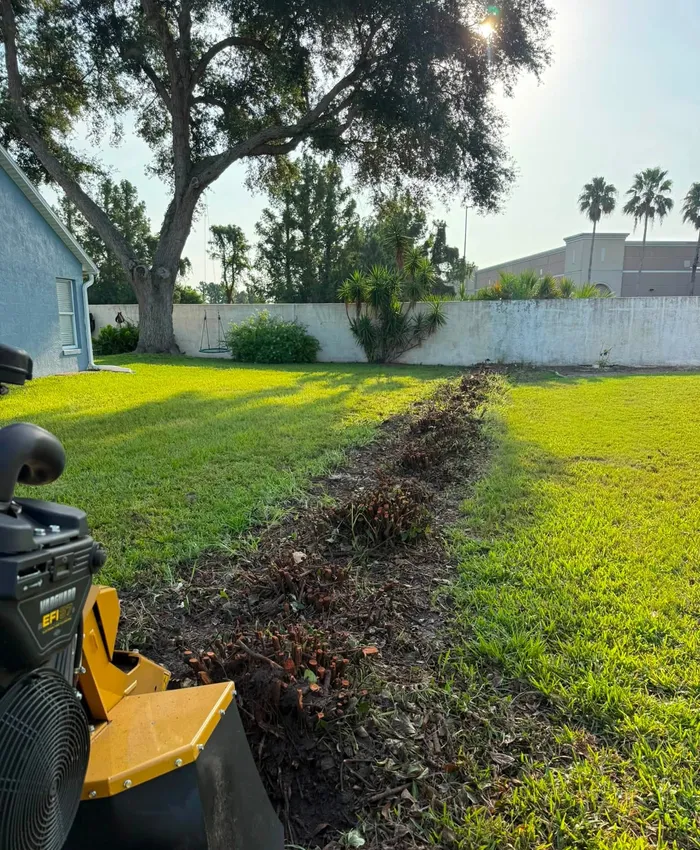
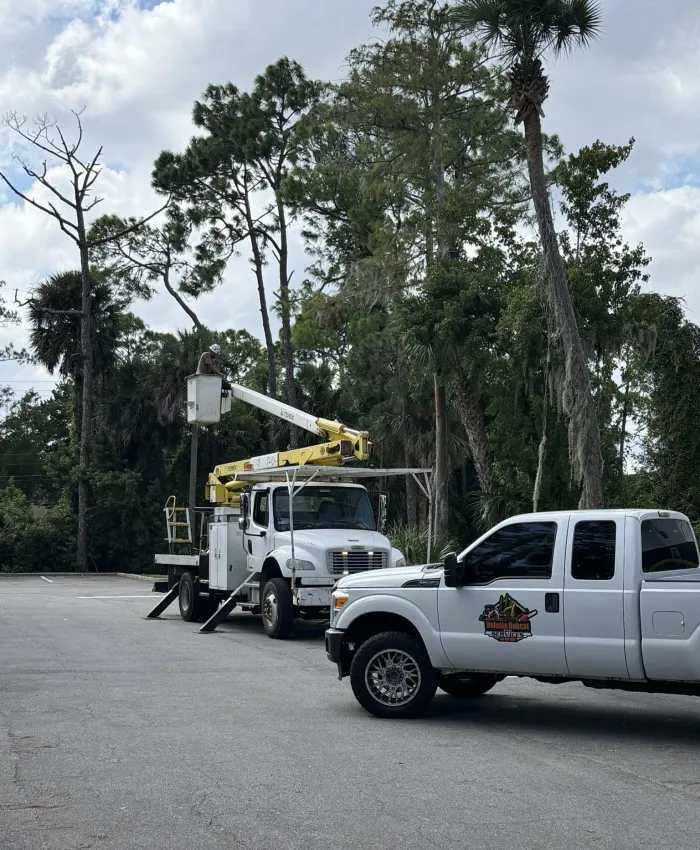
For trees in tight spaces, the standard method is piecemeal removal. The crew climbs the tree, or uses a bucket truck, and cuts it apart from the top down. Each section is lowered by rope or dropped into a clear zone. This takes longer than a straight fell, but it is the only safe way when a tree is close to a house, a driveway, or a power line. Stump grinding usually follows, unless the homeowner wants to keep the stump for landscaping or firewood.
There is also the matter of cleanup. A full removal job should include hauling away the wood, raking up debris, and leaving the yard in decent shape. Some companies offer firewood from the tree if the wood is good, which can be a nice bonus. Others will chip the smaller branches for mulch. Make sure you know what is included in the quote before the work starts.
Emergency Situations and Storm Damage
In Volusia County, we get our share of tropical weather. Hurricanes and strong thunderstorms can turn a healthy tree into a hazard in minutes. When a tree comes down across your driveway or crashes onto your roof, you need help fast. Emergency tree removal is a different animal from planned work. The crew has to stabilize the situation, remove the immediate threat, and often work around damaged structures or live power lines.
If you ever find yourself in that position, safety comes first. Stay away from any tree that is touching a power line. Call your utility company and a professional tree service right away. Do not try to clear the tree yourself, especially if it is under tension or tangled with other branches. A chainsaw in the hands of someone who is tired, stressed, and working under pressure is a recipe for injury.
Having a plan before the storm hits can make a big difference. Know which trees on your property are the highest risk. Keep the contact information for a reliable tree service handy. Some companies offer preventive trimming that can reduce the chance of a limb breaking in high wind. A little preparation goes a long way.
When to Do It Yourself and When to Call the Pros
There is a line between what a handy homeowner can handle and what should be left to the pros. If you need to cut a small branch that you can reach from the ground with a pole saw, that is generally fine. If the branch is thicker than your arm, or if it is hanging over a roof or a fence, you are better off hiring someone. Climbing a tree with a chainsaw is one of the most dangerous things you can do around the house. Even experienced arborists have close calls. The risk is just not worth it.
Another factor is the health of the tree. A dead tree is unpredictable. Branches can fall without warning, and the trunk may be brittle. A tree that is leaning heavily is also a gamble. Professionals have the training and equipment to handle these situations safely. They carry insurance, which protects you if something goes wrong. A homeowner with a rented saw and a ladder does not have that safety net.
If you decide to hire, take the time to get a few quotes. Ask about their process, their equipment, and their cleanup policy. Check that they have liability insurance and workers' compensation. A legitimate company will be happy to provide proof. Be wary of anyone who gives you a lowball estimate over the phone without seeing the tree in person. Good work costs money, and cutting corners can lead to bigger expenses later.
Tree Removal and Your Property Value
There is a common worry that removing a tree will hurt property value. In some cases, that is true. A large, healthy shade tree can add curb appeal and reduce cooling costs. But a dead or dying tree does the opposite. It signals neglect and can be a liability. Buyers and appraisers notice when a tree is a hazard. If you are thinking of selling your home, taking care of problem trees beforehand can make the property more attractive and remove a potential objection during the inspection.
On the other hand, if you are removing a tree that is healthy but simply in the way, think about planting a replacement somewhere else on the lot. A small sapling costs little and will grow into a valuable asset over time. It is a simple way to keep your yard balanced and maintain the character of the neighborhood.
The key is to approach the work thoughtfully. Not every tree needs to go, and not every tree can stay. Good judgment comes from looking at the whole picture: the tree's health, its location, your safety, and your long-term plans for the property.
Common Misconceptions About Tree Removal
Some people think that if a tree is leaning, it is going to fall right away. That is not always true. Trees can lean for years and remain stable, as long as the root system is intact and the soil is firm. But a lean that is new, or one that is getting worse over time, is a red flag. It is worth having an expert look at it to decide whether action is needed.
Another myth is that topping a tree is a good way to reduce its size. Topping is actually harmful. It leaves the tree with large open wounds and encourages weak, fast-growing shoots that are more likely to break in a storm. Proper trimming, or removal when necessary, is almost always a better choice than topping.
And some homeowners believe that tree removal is simple enough to do with a chainsaw and a few friends. That approach works until it does not. Every year, people are seriously injured or killed by falling trees and branches. The math is simple: a large tree can weigh several tons. No amount of bravado changes the physics. If you are not trained and equipped, you are taking a gamble with your life.
Final Thoughts
Tree removal is not a decision to make lightly, but it is also not something to put off when the signs are clear. A good tree service can help you evaluate your options and do the work safely. If you live in Volusia County and need professional help, Volusia Bobcat & Tree Service, located at 210 Valencia Rd, DeBary, FL 32713, USA, can be reached at +1 386-675-7898. They offer tree removal, trimming, stump grinding, emergency services, and firewood sales for the local area. Whether you are dealing with storm damage or just planning ahead, it pays to work with people who know the local trees and conditions.
Connect with us on Facebook.